18
Oct

The no-commission, sealed-bid B2B demand → offer marketplace for natural stone — connecting Aegean stone to the world.
Type "turkish marble vs italian marble" into a search engine and most of what comes back falls into two camps: patriotic cheerleading or diplomacy so careful it says nothing. As a marketplace built around Turkish suppliers we clearly have a perspective, yet this comparison only helps you if it is honest — including about the cases where Italian stone is the right call. The useful question is never which country wins; it is which stone serves your project.
Italian marble stands on a brand legacy that runs from the quarries of Carrara to Renaissance sculpture. When an architect says "the Calacatta look", the same surface appears in minds from London to Singapore, and that shared visual vocabulary gives Italian stone a genuine layer of prestige in the global market. In some projects, that story is precisely what is being bought, and any comparison that ignores it starts out broken.
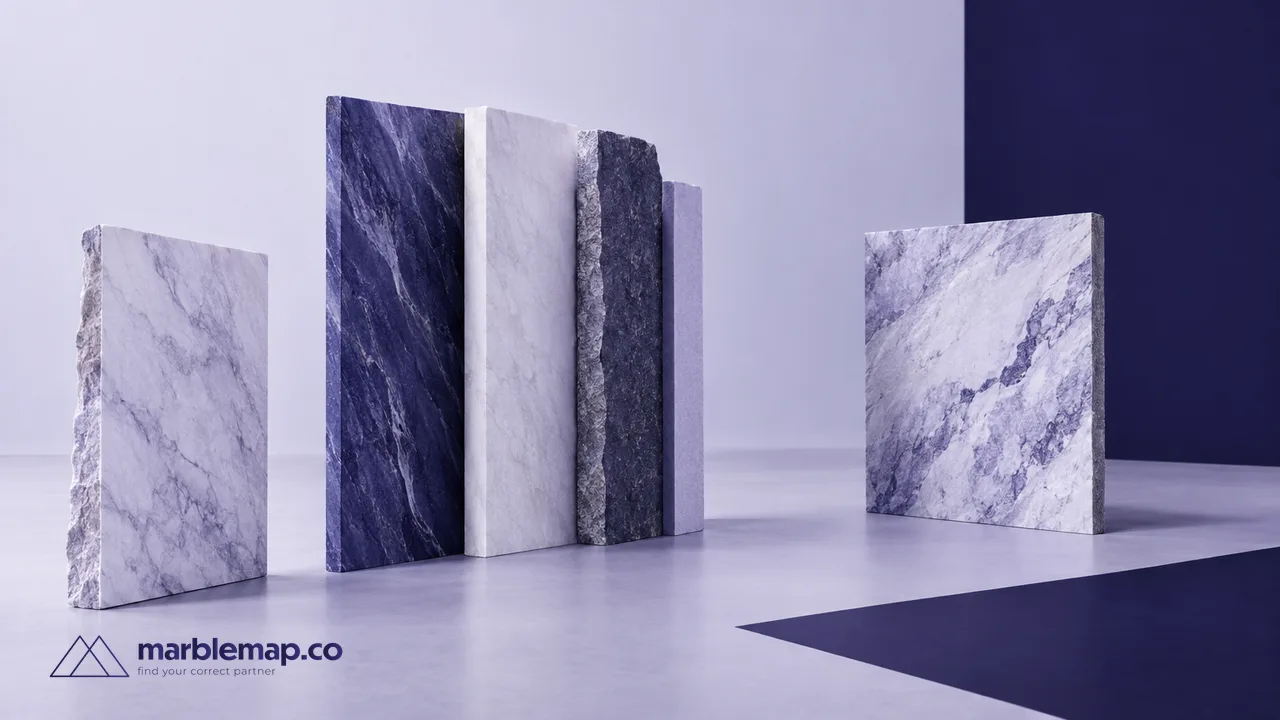
Turkey's story is built on diversity. Anatolia holds a remarkably rich natural stone geography, running from the whites of Marmara and Muğla through Afyon's classics to a wide spectrum of beiges, creams and travertines, and that geological wealth is paired with large, modern processing capacity. Where the Italian tradition perfects a handful of iconic looks, the Turkish tradition widens the palette and adds volume.
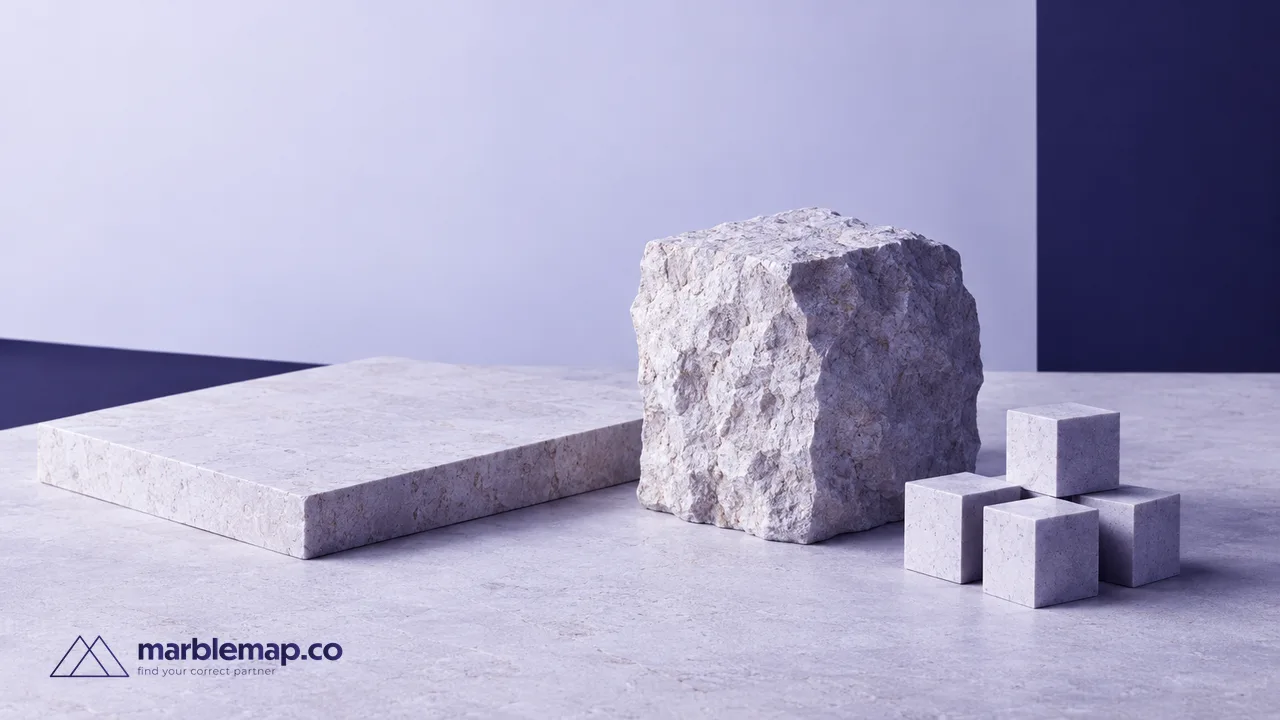
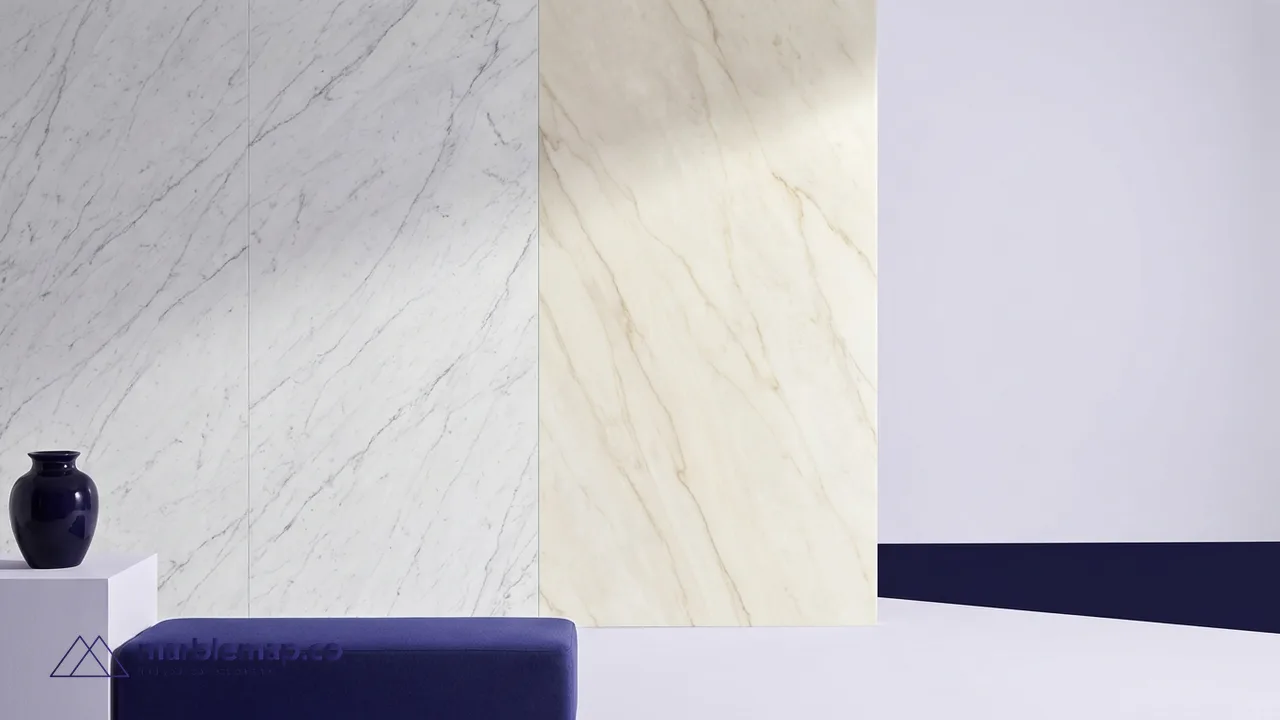
The classic Italian whites are known for a cool white ground crossed by fine grey or dramatic golden veining, an aesthetic carried unchanged from sculpture to kitchen islands for centuries. Some Turkish whites come close to that look, but Turkish stone's deepest strength lies in warm tones: beiges, creams, ivory surfaces and travertine textures that stay calm and consistent across large floors. On surfaces meant to soothe rather than perform, such as a hotel corridor, that quietness is a value in itself.
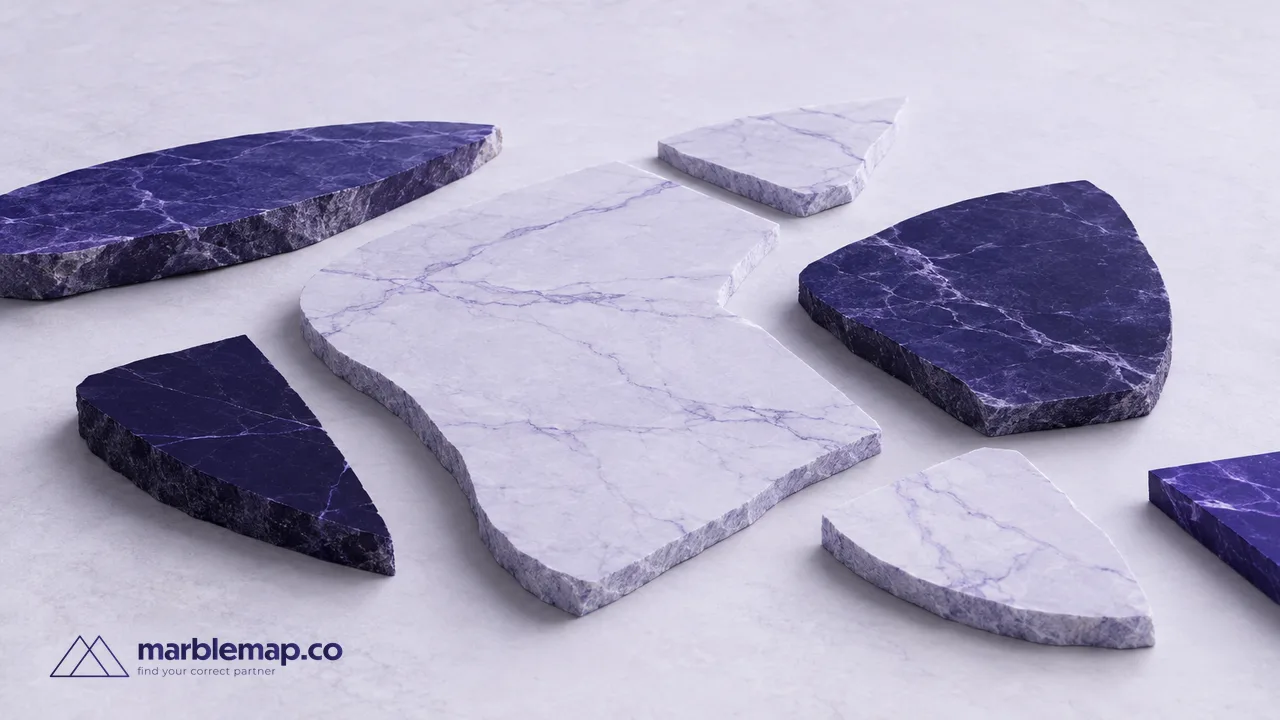
Here is the fact every buyer should hold onto: origin alone guarantees nothing. Stone sold under a single name is graded by veining and colour consistency, and two blocks from the same quarry can land in different selections. An Italian label does not redeem a weak selection, and a Turkish label does not diminish a top one. A sound comparison happens between a specific stone at a specific grade, not between flags.
You will find no figures in this article, and that is deliberate: marble has no meaningful average price. As our help article on what moves the square-metre price explains, the price is set jointly by stone type and grade, quantity, processing — cut, surface finish and thickness — packaging, the Incoterm and delivery point, and the HS code and origin that let a supplier price customs and freight correctly. The same stone reaches very different totals under different quantities and delivery terms.
Italian stone carries its heritage as a premium on the invoice; in some projects that premium is worth paying, in others it simply strains the budget. Turkish stone at a comparable visual class generally offers a stronger price-to-value balance, helped by the breadth of quarries, the scale of production and the short distance between quarry and factory. Still, no generalisation replaces an offer written to your own terms.
If the brand story is part of what you are selling — signature towers, luxury residence lobbies, a specification that names a particular Italian quarry — the Italian classics are a legitimate and sometimes unavoidable choice. Hunting for a lookalike in such a project misses the point of the job, and we are not shy about saying so.
When volume, budget discipline and warm palettes drive the project, the balance tips toward Turkish stone: hotel floors, malls and airports, residential developments, beige-and-cream interiors. A wide network of quarries and consistent selection mean the look holds from the first crate to the last, and on large-scale jobs that continuity often matters more than any single vein pattern. The honest answer, in many projects, is a mix: Italian white in the lobby, Turkish beige across the general areas, side by side in one specification.
Whichever way you lean, a sound decision needs comparable offers. On MarbleMap the process is plain: you publish a demand describing the stone, quantity, processing, packaging and Incoterm line by line, and verified suppliers respond. Under the sealed-bid principle no supplier ever sees a rival's offer, while you compare everything on one screen on a shared euro basis, request revisions where needed and decide when you are ready. Contract, payment and shipment stay between buyer and supplier; MarbleMap is not a party and takes no commission.
Reading a comparison gives you direction; the real answer for your project arrives as offers written to your own terms. Buyers start free : publishing a demand takes minutes and nothing binds you until you accept an offer. Suppliers with an active seller package see demands from vetted buyers and compete with sealed offers no rival can read. A direct route between Turkish stone and the world's projects runs through marblemap.co.