28
Aug

The no-commission, sealed-bid B2B demand → offer marketplace for natural stone — connecting Aegean stone to the world.
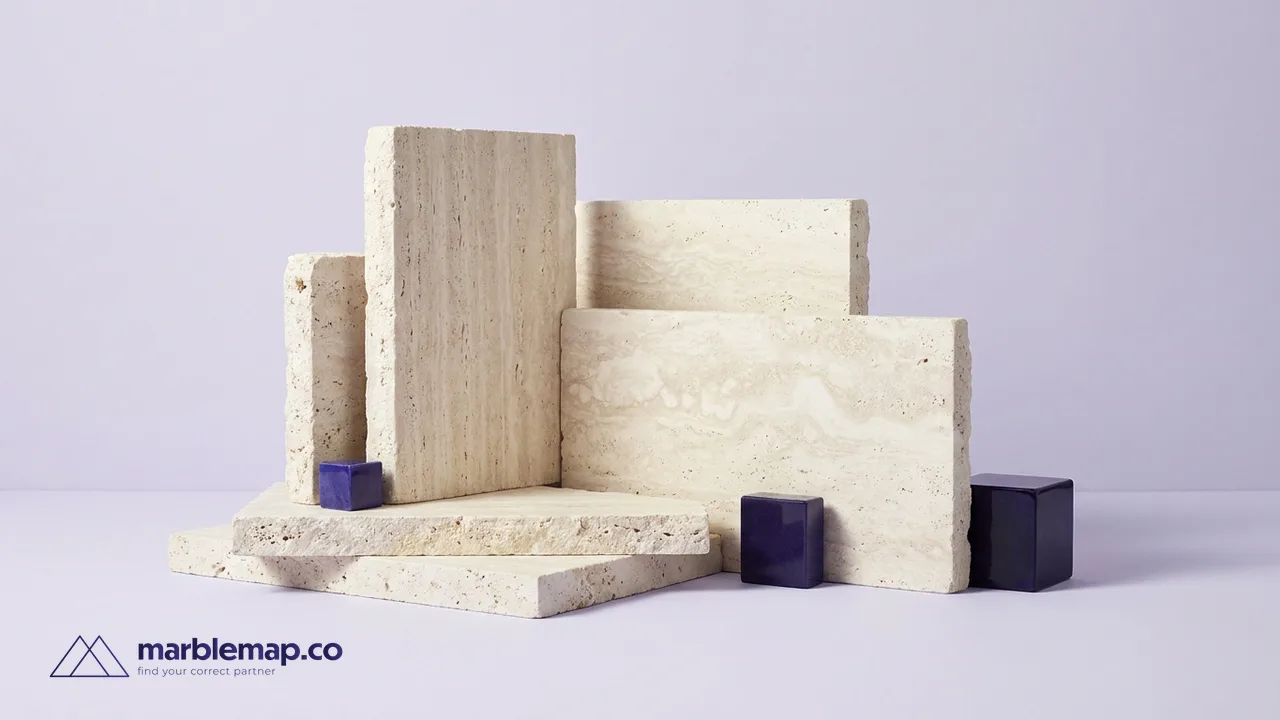
Searching for Turkish travertine often brings up Denizli, commercial color names, and attractive photographs. These are useful starting points, but none defines the material you will receive. A purchasing brief should begin with the intended application and the appearance your project requires. A hotel lobby, bathroom wall, terrace, and facade do not necessarily call for the same specification.
Describe whether the stone is for indoor or outdoor use, where it will be installed, and what the design team expects. Flooring may require particular attention to surface performance and maintenance, while wall cladding may place greater emphasis on pattern direction and visual continuity. For wet or exposed locations, establish the relevant technical requirements with your project team rather than judging suitability from a photograph.
Travertine's natural cavities and variation are part of its character. They also make acceptance criteria important. Instead of asking for “high-quality beige travertine,” explain the color range, pattern, and visible variation you can accept. This gives suppliers a practical basis for proposing material and helps your team evaluate whether an offer actually addresses the project.
Cut direction can substantially change travertine's appearance. Vein-cut material generally emphasizes linear banding, while cross-cut material can show a more cloudlike, varied pattern. Neither is automatically a higher quality grade. The choice depends on the design and how pieces will be arranged. If you share a reference photograph, explain whether you are referencing its color, pattern, or cutting direction.
Filling is a separate decision from surface finishing. Filled and unfilled stone can create different appearances and practical requirements. For filled material, clarify the filling material, color, and expected visibility. Choosing unfilled stone does not mean accepting every cavity size or edge condition. Describe the appearance you expect and discuss how the proposed selection will meet it.
Terms such as honed, polished, brushed, and tumbled help narrow the specification, but suppliers may interpret the expected result differently. Consider surface texture, edge treatment, and filling together. A finish name alone is not evidence of slip resistance or suitability for outdoor exposure. Where performance documentation is necessary, agree with your project team on the relevant requirements and include them in the request.
Specify length, width, thickness, quantity, and unit of measurement. If the project includes different sizes, separate product lines make it easier to obtain prices against the same scope. Put special cuts, edge treatments, and pattern direction in the relevant descriptions. Agree on dimensional tolerances rather than assuming that every supplier works to your project's expectations.
Selection involves more than choosing light or dark stone. Color transitions, vein intensity, visible filling, and differences between pieces all affect the finished installation. A single catalog image cannot represent an entire shipment. Ask for photographs and descriptions of the proposed batch, and discuss the variation you would accept across a larger area. Check what a supplier's commercial grade name actually means.
Buyers and suppliers may independently arrange physical samples. If you do, agree on what the sample represents, how it will be sent, and how it will be evaluated. A sample does not guarantee that every piece in the shipment will look identical. Do not assume MarbleMap provides built-in sample ordering, tracking, or fulfillment. Carry the agreed material characteristics into the order conditions rather than leaving them in an informal conversation.
A square-meter price is only one part of an offer. Selection, thickness, processing, packaging, and delivery responsibilities all influence what is included. Comparing an ex-works quotation with one that includes transport to a named destination can obscure important differences. Ask each supplier to identify the Incoterm, named place, and included charges clearly.
Packaging deserves attention before acceptance. Clarify crate contents, packing requirements, and loading arrangements, and confirm how quantities and special pieces are priced. For cross-border purchases, discuss origin and shipment documentation and confirm the appropriate customs classification with relevant specialists. Distinguish production readiness, readiness for dispatch, and expected arrival rather than grouping them under an ambiguous delivery promise.
Supplier profiles, portfolios, and supplied certificates are useful signals to examine, not independent proof of material origin, quality, supplier capacity, or delivery for a particular order. Ask for clarification or a revised offer when details are missing. A lower price is not evidence of better technical suitability. Payment milestones, acceptance conditions, and the approach to discrepancies should be as clear as the stone specification itself.
MarbleMap is a commission-free, sealed-bid B2B request-to-offer marketplace for natural stone, operated by Fusapp OÜ. It does not sell stone or set a standard price list. Buyers publish requirements and suppliers submit offers. Suppliers cannot see one another's offers, while buyers can review offers submitted to their request. Buyers start free, with paid Pro and Business plans also available; suppliers participate through subscriptions.
Use a general request when your requirement is still taking shape and suppliers need to propose their own offer lines. When sizes and quantities are defined across several products, an itemized request provides a clearer basis for line-by-line comparison. Include the cut, filling, finish, selection criteria, and packaging requirements so differences in scope are not mistaken for differences in price alone.
Before an offer, entitled sellers can start web-chat threads on the request, and buyers can reply to existing threads. Payment does not pass through MarbleMap, and there is no escrow; the parties confirm the specific stone, documents, quantity, shipment, and payment conditions. Explore the MarbleMap blog for further reading, then create a travertine request that makes your project's technical and commercial requirements clear.