22
Sep

The no-commission, sealed-bid B2B demand → offer marketplace for natural stone — connecting Aegean stone to the world.
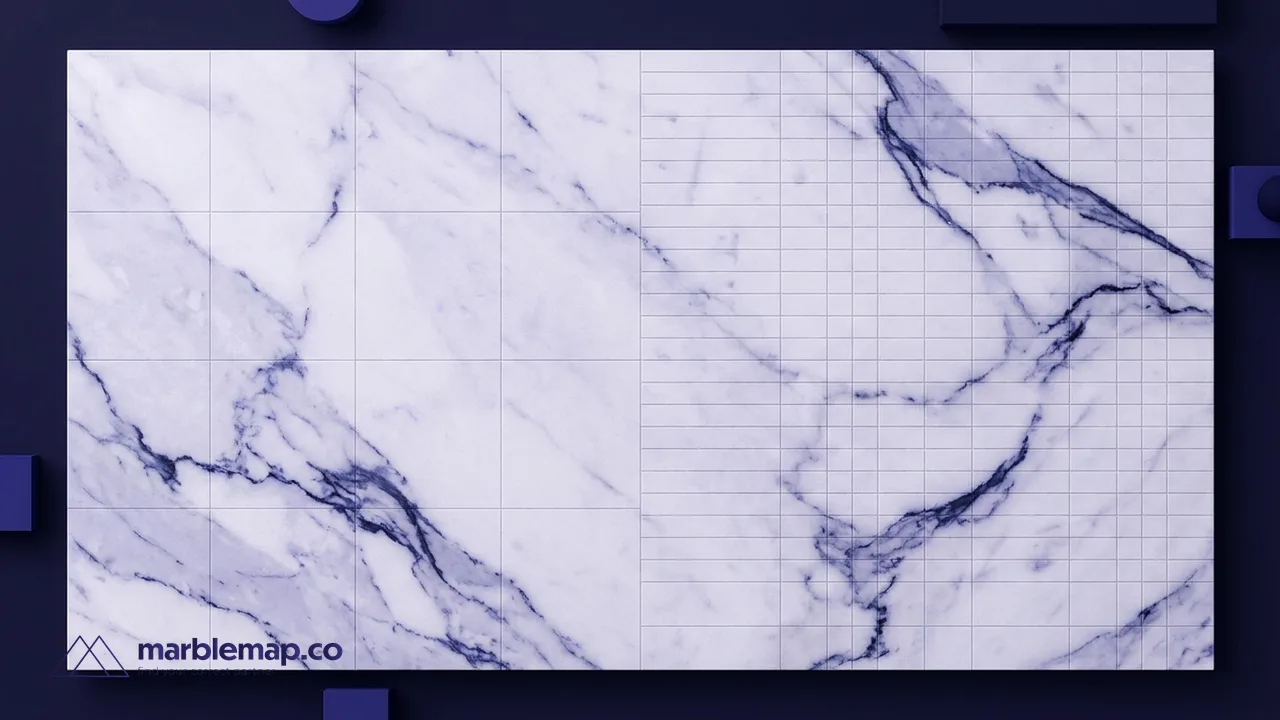
A marble quote priced per square foot may look less expensive than one priced per square meter. That impression means little until both prices describe the same area. In supplier documents, “sq ft” and “ft²” mean square feet, while “sqm,” “m2,” and “m²” mean square meters. Recognizing these labels is the first step toward a useful comparison, not the final one.
Unit differences can enter a purchase through several documents. Your architectural drawings might use one measurement system, the quantity schedule another, and the supplier’s quotation a third. If everyone assumes their own convention applies, an apparently simple price comparison can conceal a quantity mismatch. Choose a primary area unit for the purchase and check each document against it.
Even after conversion, the quotes may not cover equivalent products. Thickness, finish, cutting requirements, packaging, and delivery terms all affect what the quoted price buys. Treat unit conversion as the starting point for matching scope. The objective is not just to place two figures beside each other, but to understand whether they describe the same requirement.
A square meter covers a larger area than a square foot. The same physical surface therefore has a larger numerical quantity when expressed in square feet. Its price per square foot looks smaller than its price per square meter, even though the material total has not changed. Confusing those two directions is an easy way to distort a comparison.
To convert a price per square foot into a price per square meter, multiply it by the number of square feet in a square meter. To convert a price per square meter into a price per square foot, divide by that same factor. Use a dependable measurement converter and keep the conversion factor consistent throughout your working sheet.
Quantity moves in the opposite direction to unit price. When converting a quantity from square feet to square meters, divide by that factor. As a cross-check, multiply quantity by unit price before and after conversion: the material totals should agree apart from rounding. Avoid rounding intermediate calculations too early. If currencies also differ, record currency conversion separately so each adjustment remains traceable.
An area-based quotation does not automatically explain which area will be invoiced. Net installed coverage, the total area of cut pieces, and the area of purchased slabs can be different. A project involving directional veining or a coordinated layout may require material beyond the finished surface. Ask the supplier which measurement basis supports the quotation rather than assuming it matches your drawings.
Keep net project area separate from order quantity. If a supplier recommends additional material, ask which cutting or layout assumptions explain it. A general waste allowance should not replace a discussion of piece dimensions, vein direction, and the intended arrangement. Otherwise, two suppliers may appear to quote the same requirement while allowing for different amounts of usable material.
Other sales units need additional information. A price per tonne cannot become an area price through an area conversion alone; thickness and material information are also needed. A price per piece requires confirmed piece dimensions, and a box price requires confirmed coverage. Linear edgework is not surface area. Ask the supplier to clarify these bases rather than filling missing assumptions with estimates.
A useful request identifies the stone or intended appearance, quantity, measurement unit, thickness, finish, and cutting dimensions. Separate items when their specifications differ. This helps prevent a price for one finish or thickness from being mistaken for the price of the whole requirement. If alternatives are acceptable, describe them separately so suppliers can distinguish the requested specification from an optional substitution.
On MarbleMap, choosing an itemized product list adds product rows with required name, quantity, and unit fields. Units come from a standard list rather than free text. New rows default to square meters, but buyers should still check that the selected unit represents the purchase. With a general request, explain the measurement basis in the description and supplier notes instead.
Images can communicate appearance, but they do not replace written dimensions or acceptance conditions. Product PDF attachments are a Pro feature, and image attachment limits depend on the plan. Also specify packaging expectations, the delivery point, and the preferred Incoterm. For the wider comparison, review what determines the square-meter price : matching units does not eliminate differences in processing or delivery scope.
Once area units and currencies align, check technical specifications and commercial inclusions. Do not infer packaging, transport, or processing coverage from the price line alone. Read the Incoterm together with its named delivery place. A lower unit price does not establish better stone quality, delivery performance, or supplier reliability. Those questions require separate examination and confirmation of the particular order.
MarbleMap is a commission-free, sealed-bid B2B request-to-offer marketplace for natural stone, operated by Fusapp OÜ. It does not sell stone or set a price list. Suppliers prepare offers for your request without seeing competitors’ offers. Buyers start free, with paid Pro and Business plans available; suppliers participate through subscriptions. Payment does not pass through the platform, and MarbleMap does not provide escrow.
Before deciding, confirm the specific stone, documents, quantity, shipment, and payment conditions with the supplier. Profiles, portfolios, and certificates are signals to examine, not independent proof of an order’s quality. When you prepare your request on MarbleMap , choose one primary area unit and state the scope clearly. That gives suppliers a clearer requirement and gives you a more meaningful basis for comparing their offers.